Be yourself; Everyone else is already taken.
— Oscar Wilde.
This is the first post on my new blog. I’m just getting this new blog going, so stay tuned for more. Subscribe below to get notified when I post new updates.
Be yourself; Everyone else is already taken.
— Oscar Wilde.
This is the first post on my new blog. I’m just getting this new blog going, so stay tuned for more. Subscribe below to get notified when I post new updates.
This week I want to talk about what my milestone moment was in my drag racing career. I started racing at the age of ten but didn’t reach my milestone moment till I was 18 years old. I was a senior in high school, and I won my first race in a big car. This was very significant to me since I won it in the car that my dad and uncle used to race back in the late 90’s.
The Camaro was owned by my Uncle and my dad had always helped him with racing it during the 1990’s. Once they started growing up and having kids they both stopped racing and the car sat in the trailer for at least 15 years then was later put in my grandma’s garage. I remember when I was a kid we would ride over to my Uncles shop were the car and trailer were and I always wanted to walk in the trailer to look at the car. Later, I started working for my Uncle and at this time the car was moved into my grandmas’ garage since we were using the trailer for a Jr. Dragster I had. Anytime I had spare time I’d always walk down to the car and just look at the car and sit in it. From the time I had first seen that car I had always dreamed of driving it since the people around town would always talk about how fast it used to be.
Eventually the time came were I had aged out of the class that I was running in and if I wanted to continue racing I would need to move up to a big car. Me and my dad looked at a lot of different race cars but never found anything that was nice and in our price range. After looking for a while my dad talked to my uncle and asked if we could use his car since we thought this would be the cheapest way to get racing even though we wouldn’t own the car. The only downside to this is that the car had been sitting for about 20 years which meant it was outdated and that the motor that was in it also wasn’t good anymore.

Once we got the car we stripped it all the way down to a bare chassis and pulled the old motor and transmission out of it. We had to send the transmission off to get rebuilt and then my uncle built us another Big Block Chevy for it that had parts from a bunch of spare parts around the shop. We had tested the car a lot and had a lot of different issues that we had to work out on the car since it had been sitting for so long. Most of this happened my junior year of high school so by time my senior year came around the car was finally competitive.
It was the first week of April and the track had a race that was taking place on a Wednesday night. Normally we didn’t run during the week since with school and work it was difficult, but we decided to go to this one. The car ran really well, and I did good behind the wheel which helped us to be able to pull of the win. If was just a great feeling for me to win in the car that my dad and uncle used to race together back in the day. After winning just seeing my dad’s face you could just seen were it just took him back in time. Of course, winning is a big thing in drag racing and that’s because it earns you a lot of respect from other racers, so this helped to show the others that I was capable of winning races.
Since this will be my last blog post I want to talk about what drag racing means to me. Drag racing isn’t just a hobby to me it’s pretty much a way of life. Racing has taught me a lot of things that you just don’t learn from a textbook. I’ve grown a lot over my years of racing, and I believe it has shaped me into a better member of society.

When you talk to people about drag racing they will never understand it until they have tried it. A term that us racers use after you get big into drag racing is getting “the bug”. I got the “the bug” when I made my first pass down the track at 10 years old. It’s a sense of freedom that you cannot describe when you’re in a race car you feel zoned out from the world and all the problems in it. For me racing has made my family even closer since it is something that we can all do together. It’s just a way of life especially in my small town of King George VA where it seems that someone always has a member of the family that races. Drag racing is a sport that you don’t have to grow out of I race people now who are over 75 years old and still very competitive.
With racing I have learned how to be a good competitor and that is one who knows how to handle a loss just as good as a win. Drag racing is a sport where trophies and money aren’t just handed out for participating it’s something you have to go out and earn. Drag racing teaches you hard work and determination because without it you wouldn’t even last a full race season. It’s been able to teach me the value of a dollar because with racing you can make some money but normally spend a lot more. With this blog I hope that I have been able to give you readers a little insight on what drag racing is. I challenge all readers to go out to their local drag strips because without the support these small tracks that us racers love wouldn’t exist.
Last week I talked about some of the things that go on while at the track. This week I want to talk about the things that me as a driver will go through when making a pass down the track. People who aren’t familiar with drag racing look at it as just driving a car in a straight line, but it is a lot more complicated than that.
When it is time to make a pass, you push or drive your car up to the staging lanes and pick which lane you would like to run which normally just depends on the driver. When the car is in the lanes you need to check the tires to make sure that they have the proper air in them. If one tire has more air then the other this can cause the car to drive different and be inconsistent. Next you can start putting on your safety gear for my class I have to wear a three-layered fireproof jacket, pants, gloves, and shoes. Once you get in the car you need to put on your 5-point harness which is just a more advanced seatbelt.
Now that your suited up you can fire the car up to begin pulling up to the burnout box. Throughout the run the driver is responsible for keeping an eye on all the gauges to ensure that everything is running properly. The burnout is when you heat the tires up on the car to help the tires stick better to the track surface. When heating the tires, you need to be careful not to overrev your engine since it turns up a lot quicker since the tires have less drag in the water. After coming out of the water you need to make sure that you line your car up in the groove. The groove is the two lines on the racetrack where the most stick is and can look different depending on the track.
The car is now ready to make a pass so now you can stage the car which is where you pull forward until the top lights of the Christmas tree come on this is called being pre-staged. After this you clear the engine out to make sure everything is good one last time then you can inch forward until the bottom stage lights come on which will then activate the tree.
Now you hold down your trans brake on your steering wheel and once the top yellow comes on you release it and put the gas to the floor. Once the tree gets to green the car will take off and your main job now is to keep the car going as straight as you can and continue keeping an eye on your gauges. After you reach the finish line depending on how fast your car is you will pull your parachutes, knock the car in neutral, and shut the motor off. Then you will pull off the track and return to the pits and that’s what its like to make a pass down the track.
Last week I talked about some of the things that need to be during to the week to get ready to go racing. This week I want to talk about some of the things that are done at the track before making a run. Just because you work on the car all week doesn’t mean that things get easier on race day. On a race day there is very little downtime to watch other people since there is always something to be done to the car. Some of the things I talk about may only apply for faster cars since most the time the slower the car the less maintenance you have to do between runs.
When I first get to the track the first thing I do once I get the car unloaded and get the frontend off is get it ready to warm up. Before making a pass in the car you want to be sure that all the fluids in the engine, transmission, and rear-end get a chance to move around and get warm. With most faster cars today, they run a dry-sump oil system which is where they don’t have any oil sit in the oil pan instead a pump pumps oil throughout the motor. Before firing the engine for the first time you must prime the pump so that you don’t turn the motor over dry. Once the engine is primed you can finally start the car.
Everyone does things differently, but I always use a jack to jack the car up of the ground to get the rear tires off the ground. Then I hope in the car and turn it on and run it through the gears. With our car it has a high and a low gear plus a reverse, so I let the car run for a minute or two in each gear to make sure it gets warmed up properly. While doing this I also listen to how the car sounds to make sure it sounds like it should.
After the car is warm the car must be fueled up and checked over again to make sure that there aren’t any leaks. Also, our car has dual parachutes that are run off air solenoids so before making a run you must air the chutes up so that if needed they will deploy. The wheelie bars also need to be set at the right height since they are like an extra set of wheels and can greatly affect how the car leaves off the line. Once all these things listed above are complete the car is ready to make a run which is what next weeks blog post will be on so stay tuned.
This week I want to talk about what a normal week is like for me before going racing. I’m sure a lot of people might think you just go to the track and just put the car in the trailer until the following week. Now some people might do this, and it all depends on how expensive of an operation you have and normally the faster you go the more work it is.
When I first started racing we had a very low maintenance car that didn’t require a lot of attention during the week. Now that I have moved up to faster cars it has required a lot more attention during the week. The faster the car is that you drive the more important it is for you to have a weekly checklist of things to do on it. It’s best to do this no matter the car though cause if something was to come loose on the car you’re not just putting your life in danger but also your competitors.
After a week of racing the first thing I do once I get the car into the shop is I over check every single nut and bolt on the car. Unlike a normal daily driven car, a race car is always constantly shaking just between making a run and having a high horsepower engine between the frame rail. Once this is done I will inspect the motor to make sure everything is in good operating order and insure there aren’t any leaks. On the car I currently drive we will check the valve lash after every race since the valve spring have so much seat pressure on them. It is a lot cheaper to do this weekly maintenance and maybe have to replace a $200 part then it is to have to build another $30,000 race car engine.
Once the car has been checked over before every race I thoroughly clean the car so that it looks good. From a young age my dad always told me that if the car isn’t clean we aren’t racing and that’s something that has always stuck with me. Along with all the things I have listed above as a driver I practice for an hour or so everyday on a practice tree so that I can stay sharp on my reaction times. The reasoning for this is when I go to the track I don’t want to go just to participate I want to go and win so the practice tree helps to make me better as a driver.
Since the beginning when drag racing began it has always been about innovation and being a step ahead of the competition. This week I want to talk about a few of the technology advancements that most racers use today and how they are beneficial. I plan to talk about the use of delay boxes, air or electric shifters, and parachutes.
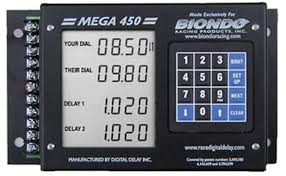
A delay box is a timing system that is run through a trans brake. With a trans brake once you engage it locks the car in first and reverse allowing you to leave at a lot higher rpm. With knowing this a delay box helps a driver have more consistent reaction times. With a delay box you hold down a button on the steering wheel and put your foot to the floor which makes the car come up on a chip which is however high you want the car to rev to. When the Christmas tree starts to come down you release the button when you see the first yellow bulb light up and then the car will sit there for however long you have your delay set for. The advantage to this setup is if you let go of the button consistently you can change the delay timing in the box to make your lights better which in turn normally wins more races.
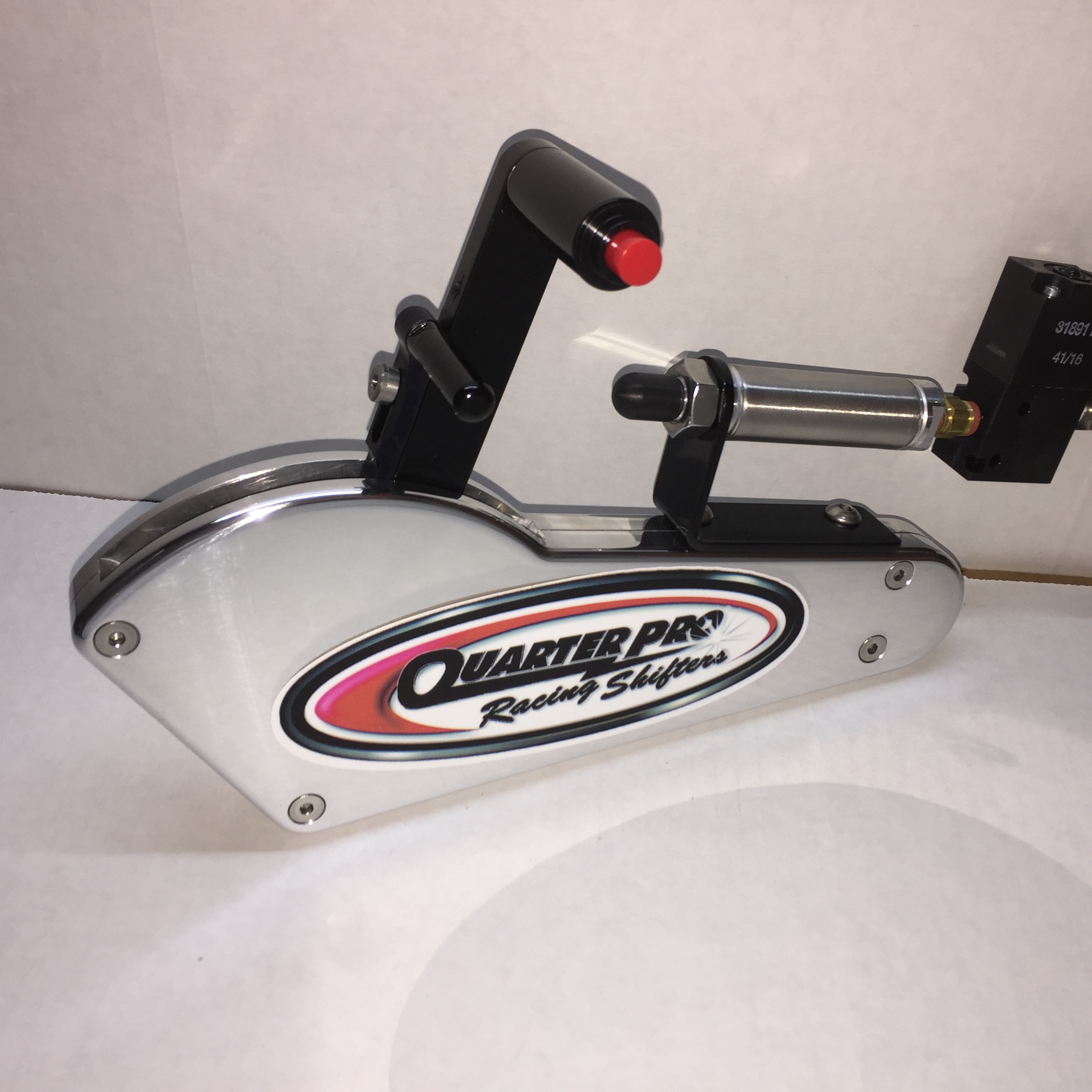
With cars that drive on the roads today most shift themselves, but it hasn’t always been like that in the racing industry. When I first started racing in a door car I had to shift the car manually from low gear to high gear. Not long ago though an automated shifted was made that bolted to the back of the shifter that would shift your car at whatever rpm you choose. Most of these shifters are either powered by air from a co2 tank or electric. Some advantages to using one of these is that it is one less thing that the driver has to worry about going down the track. Also, it is more consistent since you just set a specific rpm for it to shift at and if shifts at the same spot every time.
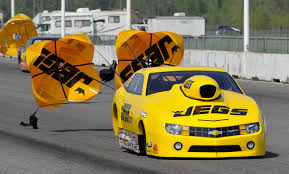
Like I had stated about a lot of things have changed in the industry one of the big things is the speeds that cars are exceeding. Hen racing first started most cars didn’t even exceed 100mph but now a top fuel dragster is capable of exceeding speeds of 330mph. With speeds like these your normal disc brakes can only help but so much which is why the parachute was invented. A parachute is strapped to the back of a competitor’s car and is held in by a pin. This pin is connected to a cable that goes to a lever inside the car which is what the driver pulls to deploy it. Now parachutes are actually a requirement on some cars now depending on how fast they go. Cars that go 150mph or more are required to have at least one parachute and cars that exceed 200mph are required to have two. Parachutes can help save a race since whenever a driver gets sideways it should always be your first instinct to pull the chute since the air that goes into the chute will help to straighten the car out.
The world of racing is still constantly evolving and new innovations are made each year. In this post I only touched on a few of the ones that I have used. Hopefully this was able to provide you with more knowledge about the world of drag racing.
In this blog I want to talk about a few of the pioneers that have been involved in the sport of drag racing. I will talk about Bob Glidden who has the most championships for a pro stock driver. Kenny Bernstein who is the first top fuel racer to reach 300 mph. John Force who is the winningest funny car driver in history. Last but not least Don Garlits is the one responsible for designing the first rear engine dragster.
Bob Glidden did a lot for the sport and was known for working harder than anybody else. When Glidden was racing he hand made his intake manifolds which made a lot of other driver to get more creative in order to keep up. With all of Bob’s accomplishments his family was always there with him even when he made it big time. He wasn’t born with money he was a driver that had to work for everything he had. Bob Glidden helped to innovate the pro stock class in the beginning when the class was just getting started and played a key role in making it turn into what it is today.

Kenny Bernstein whose nickname is the “Bud-King” was the first driver to reach 300mph in a top fuel dragster. Kenny got his nickname since throughout most of his career he was sponsored by Budweiser. He was always known for pushing the limits and being a fierce competitor. Before he made the first 300mph run everyone had said there was know way it could happen, but Kenny was persistent and made it happen.
John Force is the winningest professional drag racer in history in terms of championships and event wins. Force like Glidden started from nothing he first got into racing with his moms four-door sedan and eventually made it all the way to the top. After this past year John was able to become the first driver to have over 150 national event wins along with 16 national championships. Even with all of his prior success he is still racing and competitive as ever even though he is 70 years old.

When it comes to top fuel racing I don’t think anyone did as much as Don Garlits did. When top fuel started all the motors sat in front of the drivers which turned out to be very dangerous. As the sport evolved the clutches would explode in the cars and cause the cars to split in half. Don Garlits had that exact situation happen to him and he ended up losing half of his foot. After this happened he invented a new dragster that placed the motor in the back and completely changed the class. Without this innovation cars would never be as safe as they are today.

In this week’s blog post I want to talk about the difference between a dragster and a door car. I want to talk about the advantages and disadvantages about each. Each person has a different preference on what they like and just depends on what the driver wants. I also plan to talk about the difference in cost between the two and what my preference is.
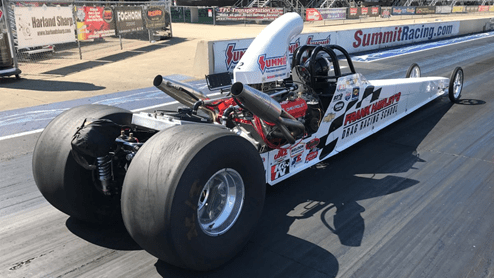
One advantage that comes with a dragster is when you go bracket racing. To give a quick recap from last week bracket racing is a way for cars of all speeds to race against each other. Each car gets to make two time runs to see what elapsed time their car runs. Off these runs the person will put a dial on there car and cannot run faster than that time. To sum this up if both cars were to have perfect lights and run dead on their dials then they would reach the finish line at the same time. When you reach the finish line in a race you want to reach the finish line by the shortest margin possible. With a dragster you can see the front tires a lot easier than you can in a full-size car which makes it easier to judge the finish line.
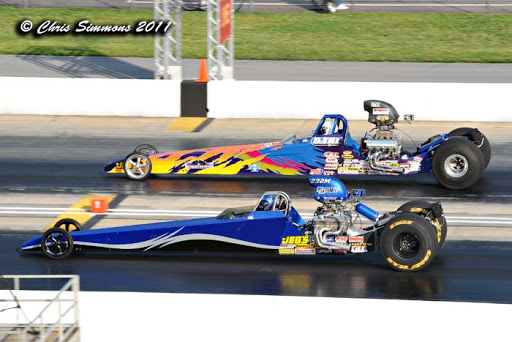
When owning a dragster, it is a cheaper way to go fast since they weigh a lot less than a normal door car. The average door car can weigh anywhere from 2200-3300lbs where a dragster normally weighs in at around 1700-2000lbs. In drag racing weight is everything and by an average rule of thumb saving 100lbs equals a 1/10 in elapsed time. A lot of people chose a dragster since it doesn’t require as much motor to go faster and you can also get a dragster chassis cheaper than you can a door car chassis.
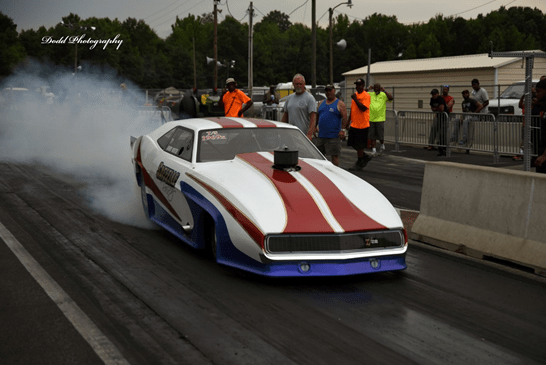
Even with all the advantages I’ve listed above I still have always picked a door car over a dragster. To me a door car has more character and shape to it since most all dragsters look the same except for the paint. I like how door cars have more room on the inside whereas a dragster you are confined into a small space. Both dragsters and door cars have their advantages and just depends on what the driver’s preference is and I’ve seen people be competitive in both.
For this week’s blog I plan to talk about the different styles of drag racing. There are many different forms of drag racing all have their ups and downs and appeal to different people. First I plan to talk about bracket racing which is what I currently do. You have a heads-up style racing which also will include no-prep racing. Then lastly I plan to talk about Index racing which is mostly used in the NHRA.
Bracket racing is a form of racing that allows for cars of all different speeds to compete against one another. In bracket racing you can have a 300hp car racing up against a 1200hp car and the lower hp car can still have just as good of chance of winning. Most local tracks run a bracket program every weekend throughout the racing season. Normally there are two different classes that you can choose to enter in one is Top Et which means electronics are allowed and Modified Et which doesn’t allow electronics. In Top Et cars are allowed to leave off a trans brake and delay box which makes it easier for a driver to cut a better reaction time along with leaving off the top bulb instead of the bottom. In Modified Et cars leave off a footbrake which is when you just build up your rpms while having your foot on the brake and leaving of the bottom bulb of the tree. With bracket racing all drivers get to make two test runs before eliminations to see how fast their cars run. From the two time runs you put a dial number on your car on what you think it will run and if you run faster than that time then you are eliminated. So, for racing each car has their dials if one car is slower than the other it gets to leave first so that by the finish line they should be even if both were to run dead on their dials.
In heads up racing the tree comes down at the same time for both drivers and whoever gets to the finish line first wins. With heads up racing it turns into a big money game most of the time and whoever has the most money in their car wins. No prep racing was thought of to get rid of the money aspect and puts it more on the tuning and driving then on the money in the car. In no prep the track is dragged before the race to remove all previous rubber which makes the track slicker. This requires the drivers to tune their cars to the track to make them get down and the car with the most hp doesn’t always win. This is turning into the most popular style of racing since it is been used on Discovery Channel’s Street Outlaws.

Index racing incorporates pieces of both styles of racing that I have stated above. Index racing is heads up but both drivers must run a specific time depending on which class they are running. Most drivers in this class run a throttle stop which helps slow down the car to run the time they are supposed to run. Like in bracket racing if you go faster then the time you are supposed to then you are eliminated.
With this blog post I hope I was able to inform new people in drag racing the different styles there are to choose from. Above I have only listed the main three types of racing but there are still plenty more. Racing is a sport that is constantly adapting and changing with what different people like.
For my next blog post I plan to talk about the history of drag racing and how it started. When it comes to drag racing most people think of the NHRA but there was a time when that didn’t exist. Back in the 1930’s before there were paved dragstrips people used to race their cars on the dry lake beds of the Mojave Desert in California. Even though there was drag racing in the 1930’s things didn’t really start to ramp up until after the soldiers came back from WW2. After the soldiers came back from the war the sport began to grow rapidly and many people began racing their cars on the street. This is the reason that the NHRA (National Hot Rod Association) was founded by Wally Parks in 1951. Wally Parks founded the NHRA to keep racers off the streets and put them on the track a place where safety standards could be implemented.
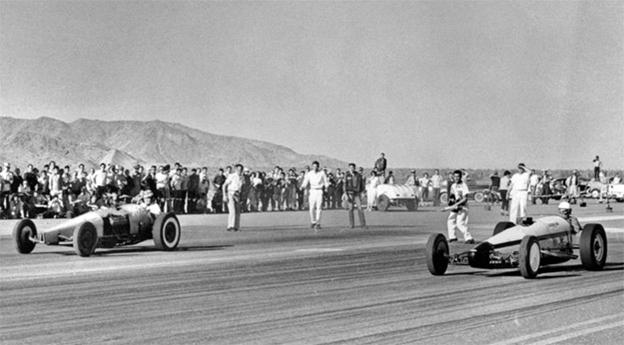
Retrieved From: https://www.nhra.com/news/2016/first-nationals-winners
In 1955, the NHRA held its first National event that took place in Great Bend, Kansas. The NHRA has grown greatly since holding its first event the NHRA currently has over 70,000 members and 40,000 licensed competitors. There are over 120 tracks that are members of the NHRA that hold weekly events where competitors can come out and show off their skills. There are a variety of different classes that competitors can enter into with having more then 20 different classes to choose from. With all the different class options this gives all competitors a class to enter in know matter how fast or expensive your car is. Before the NHRA when people used to race on the street most racing was all heads-up racing. With the NHRA having advanced timing systems it allows for racers with low income cars to compete with other high-income cars. In the beginning when drag racing started cars were only reaching speeds of 100 mph but now with all the new innovations there are some cars exceeding speeds of 320 mph.
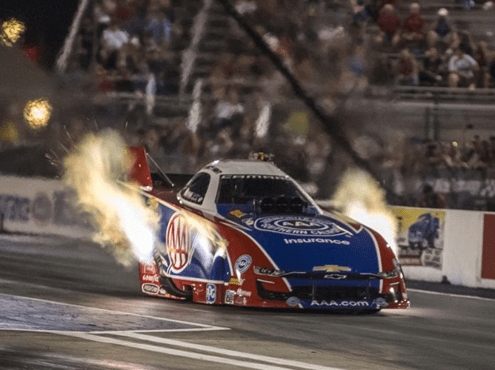
Retrieved From: https://speedsport.com/drag-racing/nhra-drag-racing/hight-heads-gateway-funny-car-field-early/
The sport of drag racing has added a new way for companies to advertise their business especially ones that are directly related to the car industry. The sport has changed a lot in terms of how some of the major teams operate. When racing first started you could go racing with your own money now in order to race in the big leagues you have to have major sponsorship that backs you for the races. For all the big teams that are racing in the NHRA’s top series they only make money from sponsorship the money won from winning a race doesn’t cover the expenses. Some of the cars that run in the top classes can cost over $1,000 to make a single run. Drag racing is the second biggest auto racing series in America just behind NASCAR. Hopefully with this article I was able to provide some insight on just how far along the sport of drag racing has come. Sources Cited: NHRA History. Retrieved from https://www.nhra.com/nhra-history

 Robert's Blog